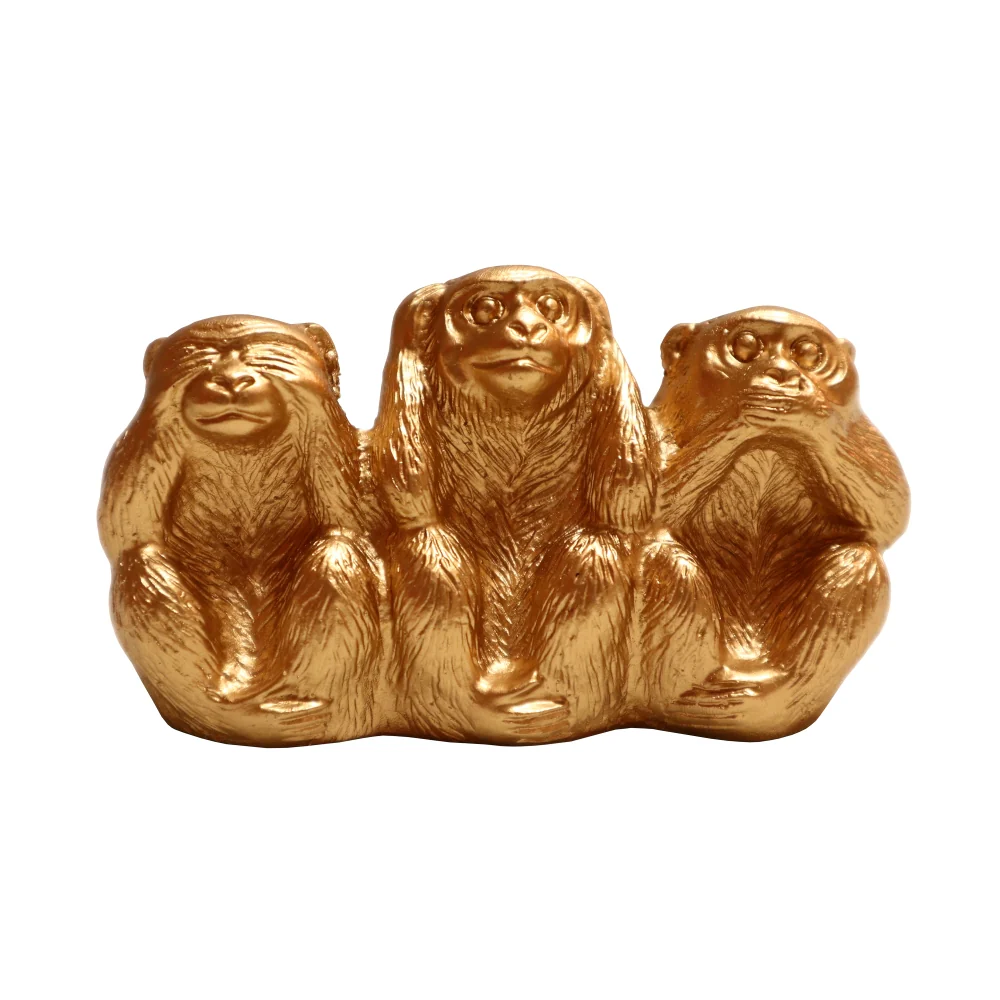
3 No Evils Monkeys
The idea of three figures covering their eyes, ears, and mouth comes from the "three wise monkeys" motif of the Muromachi period (1336 to 1573) in Japan.
The philosophy behind the three wise monkeys probably came from Buddhist teachings. The teachings claimed that not seeing, hearing, or speaking evil would spare one from evil.
So why monkeys? The imagery is a play on words. The original Japanese proverb is "Mizaru, kikazaru, iwazaru" or “See not, hear not, speak not.” The zaru part of the words is also a modified form of the word for monkey, saru. As a result, monkeys were included in the depictions of the teachers, appearing in monuments, scrolls, figurines, and more.
- Size: 3.25 W x 2 H inches
- Material: resin
Original: $6.50
-65%$6.50
$2.27Product Information
Product Information
Shipping & Returns
Shipping & Returns
Description
The idea of three figures covering their eyes, ears, and mouth comes from the "three wise monkeys" motif of the Muromachi period (1336 to 1573) in Japan.
The philosophy behind the three wise monkeys probably came from Buddhist teachings. The teachings claimed that not seeing, hearing, or speaking evil would spare one from evil.
So why monkeys? The imagery is a play on words. The original Japanese proverb is "Mizaru, kikazaru, iwazaru" or “See not, hear not, speak not.” The zaru part of the words is also a modified form of the word for monkey, saru. As a result, monkeys were included in the depictions of the teachers, appearing in monuments, scrolls, figurines, and more.
- Size: 3.25 W x 2 H inches
- Material: resin